Swedish Gambling Laws' Hidden Effects on Poker Tactics at Online Platforms and Live Casino Tables
Mara Hayes · Aug 18, 2026

Swedish Gambling Laws' Hidden Effects on Poker Tactics at Online Platforms and Live Casino Tables
Swedish gambling regulations have reshaped poker environments since the 2019 re-regulation, and data from Spelinspektionen shows how licensing rules influence player pools, payment flows, and game selection at both online sites and physical tables. Observers note that operators must meet strict local standards for advertising, bonuses, and player verification, which in turn alters how participants approach bankroll management and table selection.
Regulatory Framework and Market Structure
Sweden's system requires all online gambling operators to hold a license from Spelinspektionen, while land-based casinos operate under state-controlled entities; this structure limits unlicensed competition and channels activity through approved channels. Research indicates that the number of active poker tables and tournaments on licensed platforms stabilized after initial market consolidation, with fewer recreational players entering due to verification hurdles and restricted promotional offers.
Payment processing follows additional oversight that mandates traceable transactions through Swedish banks, and this requirement affects how players move funds between sessions or across sites. Those who track regulatory updates point out that such measures reduce the speed of deposits and withdrawals compared with pre-2019 conditions, prompting adjustments in session timing and risk sizing.
Online Platform Dynamics
Licensed online poker rooms display smaller but more consistent player pools because marketing restrictions limit acquisition of new users from outside Sweden. Figures from industry reports reveal that average stakes per hand have shifted toward mid-level games as high-volume grinders concentrate on fewer tables to maintain volume under tighter bonus conditions. Game selection tactics now incorporate checks for rake caps and player loyalty programs that comply with local rules, since aggressive bonus hunting draws regulatory attention.
Multi-tabling strategies adapt when operators enforce session limits or device tracking to meet responsible gambling standards, and players respond by rotating between sites during peak hours to maintain action volume. Data collected through 2025 shows a measurable drop in late-night recreational traffic, which changes the composition of tables and rewards tighter pre-flop ranges in many formats.
Live Casino Table Adjustments
At physical venues such as those operated by Casino Cosmopol, entry requirements and smoking policies combine with national self-exclusion registers to influence attendance patterns. Staff at these locations report steadier but smaller crowds on weekdays, leading to longer average session times per player and altered table image considerations. Tournament structures reflect these attendance trends, with slower blind increases in some events to accommodate the more professional local field.
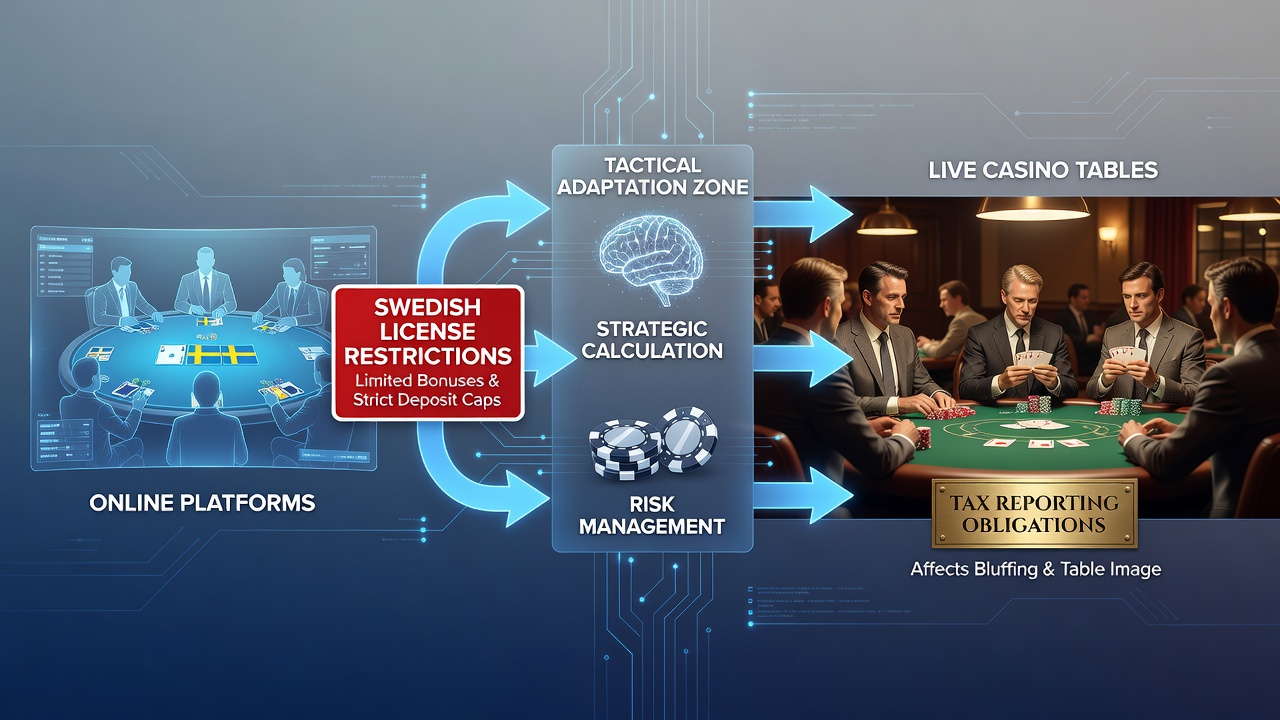
Physical table tactics also incorporate awareness of age verification and exclusion list checks that occur at entry, which can reduce the presence of casual visitors and tilt games toward experienced regulars. Observers have documented how this environment rewards patient aggression over speculative play because the player pool tends to be more familiar with standard strategies.
Emerging Changes Around August 2026
Beginning in August 2026, updated compliance protocols will require enhanced monitoring of high-volume accounts and additional reporting on bonus usage across licensed platforms. Early indications suggest these measures will further standardize player identification processes and limit the use of certain third-party payment services, which may compress the window for quick bankroll transfers between sites. Players who monitor these developments have already begun testing alternative session structures that rely less on frequent reloads and more on extended single-site play.
Live venues face parallel reporting requirements that track aggregate playtime and loss limits, and this data collection may influence future decisions about tournament scheduling and table availability. The combined effect across channels appears to favor participants who maintain detailed records of their own activity to stay within emerging thresholds.
Conclusion
Swedish gambling laws continue to shape poker tactics through licensing conditions, payment rules, and player protection measures that affect both digital and physical environments. Information from regulatory sources and market analyses demonstrates consistent patterns in how participants adjust game selection, session length, and risk management to align with the current framework, and further refinements scheduled for 2026 will likely extend these influences. Those studying the market note that ongoing compliance updates provide a clear basis for anticipating tactical evolution at Swedish poker tables and platforms.