Mapping the Career Paths of Emerging Poker Talents Through Sweden's Tournament Circuit
Kai Lange · Aug 20, 2026

Mapping the Career Paths of Emerging Poker Talents Through Sweden's Tournament Circuit
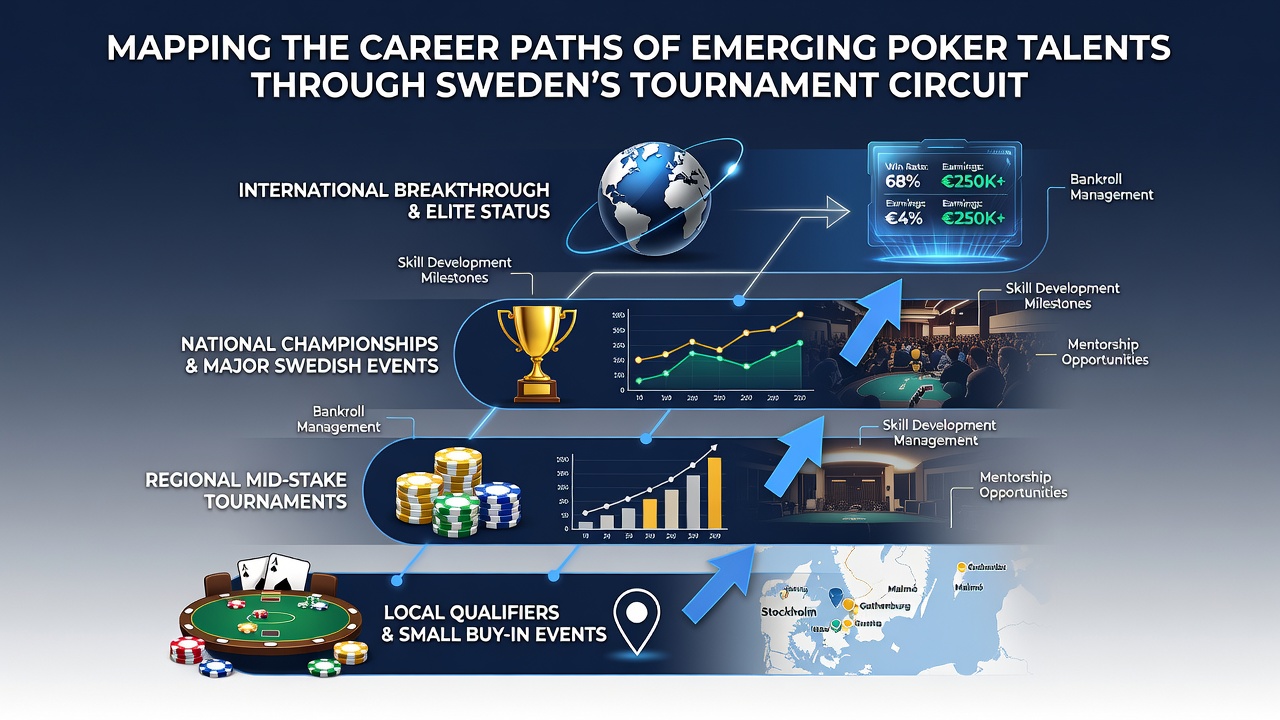
Sweden maintains a structured tournament circuit that supports player development from regional qualifiers to international stages, and data from national gaming regulators shows consistent participation numbers across live events. Players typically enter through smaller venues in cities like Stockholm and Gothenburg, where entry fees range from a few hundred kronor upward, allowing gradual skill refinement before larger buy-ins. Observers note that this progression aligns with patterns documented in European poker reports, where early exposure to structured play correlates with longer career durations.
Entry Points and Initial Development Stages
Local casinos and poker clubs serve as primary gateways, and figures from the Swedish Gambling Authority indicate that these venues host weekly tournaments that draw hundreds of entrants annually. Young players often combine these events with online qualifiers to build experience without immediate financial strain, while regional series provide consistent schedules that help track performance metrics over multiple months. Studies from gaming research institutions reveal that participants who log at least 50 live tournament hours in their first year show improved decision-making in subsequent circuits compared to those who skip this phase.
Progression Through National Series
The Swedish Poker Tour organizes stops that connect regional winners to national finals, and records from event organizers demonstrate that top finishers frequently advance to EPT or WSOP side events within two seasons. This pathway incorporates satellite tournaments that reduce costs, allowing talents to accumulate points and bankrolls simultaneously. In August 2026 the circuit includes additional stops in Malmö and Uppsala, where preliminary data projects increased field sizes due to expanded online feeder events. Those who study these patterns find that consistent cashes in mid-tier events often precede breakthroughs at higher-stakes tables, with success rates tracked through official leaderboards.
Support Structures and Training Resources
Coaching networks and player forums in Sweden supply strategy resources that complement live play, and reports from industry associations highlight partnerships between tournament operators and training platforms. Emerging talents access these through membership programs that include hand reviews and mental game sessions, which data from performance analytics firms links to higher retention rates among circuit regulars. Government licensing requirements ensure that venues maintain transparent prize pools, creating predictable environments where players can calculate return on investment more accurately than in unregulated settings.
Transition to International Competition
Once players accumulate sufficient results on the domestic circuit, many target European Poker Tour stops and World Series of Poker Europe events, and tracking data from tournament databases shows Swedish qualifiers achieving final-table appearances at rates above the regional average. Funding often comes from staking deals arranged through established networks, while tax regulations under EU frameworks allow clear reporting of winnings. Observers note that this step requires documented live results to secure sponsorships, and several case studies from academic papers on professional gaming careers illustrate how early national rankings predict sustained international participation.
Challenges and Statistical Outcomes
Bankroll management remains a documented hurdle, and figures released by European gaming associations indicate that only a small percentage of entrants reach professional status after three years on the circuit. Variance in results leads some to diversify into cash games or online formats, whereas others exit the scene entirely. Research from university-led gaming studies emphasizes the role of volume in mitigating short-term swings, with datasets covering thousands of tournament entries supporting the observation that players who maintain detailed records achieve steadier progress.
Conclusion
Sweden's tournament circuit supplies measurable stepping stones for emerging talents, and official statistics combined with international tracking tools confirm that structured participation leads to defined career trajectories for those who persist. The August 2026 schedule continues this framework with new regional events, offering updated data points for ongoing analysis of player development. External resources such as reports from the Swedish Gambling Authority and industry summaries from the European Gaming and Betting Association provide additional context on regulatory and participation trends that shape these paths.